The board / Ready
Put it into English: Sumerian receipts
Draft translations. Unverified. Not yet read by an Assyriologist. Every word reading is checked by code against the Sumerian dictionary’s glosses. Whether each translation as a whole is right is for a reader of Sumerian to judge.
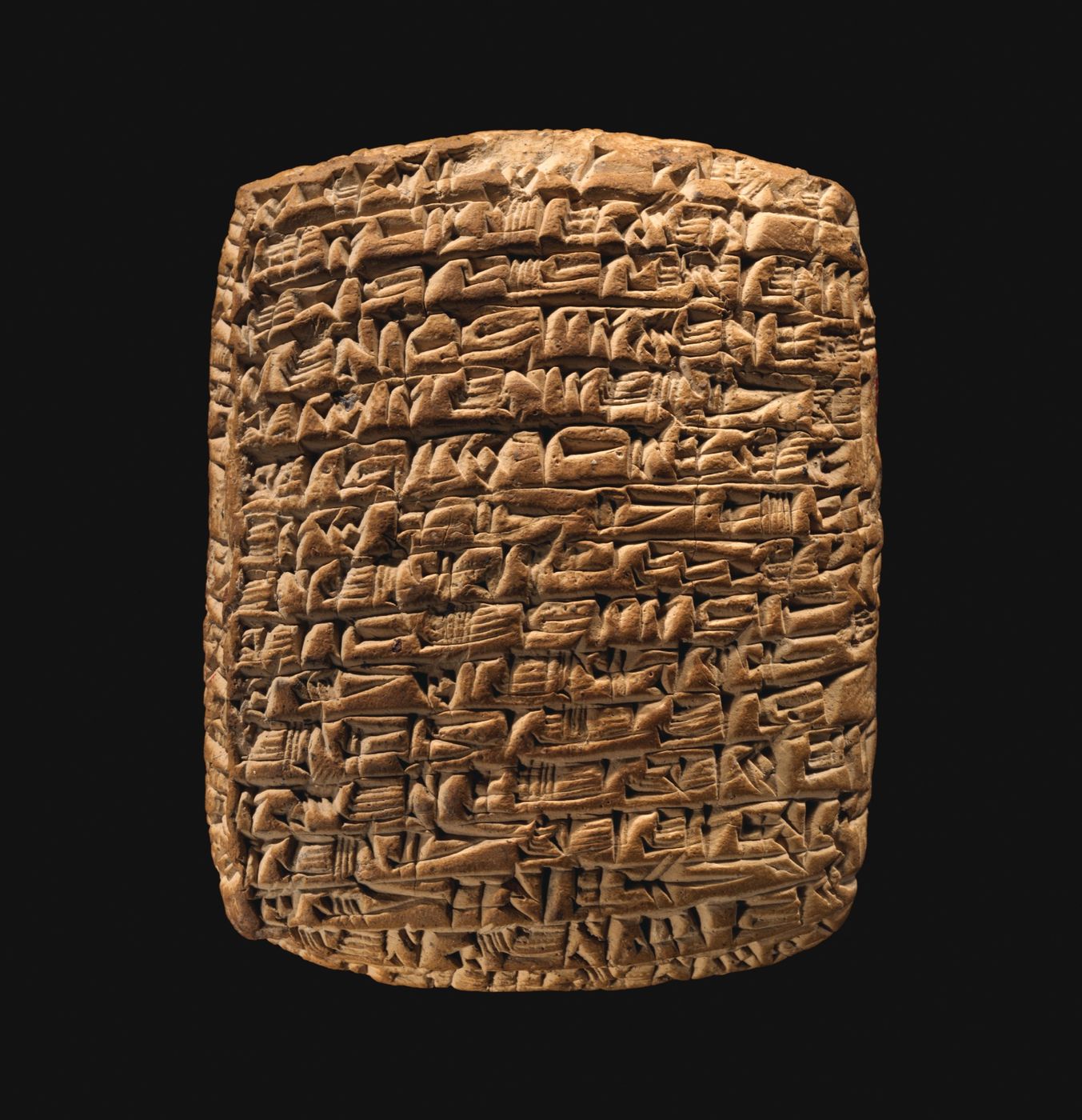
The kings of Ur ran a livestock center at Puzrish-Dagan, modern Drehem, around 2050 BCE. Its scribes recorded every animal that came in or went out. Tens of thousands of these receipts survive. Scholars have transliterated them, and the Electronic Pennsylvania Sumerian Dictionary glosses every word, partly by machine. Most have no English translation anyone can read.
This pack gives a model one intact tablet at a time. It glosses every word, and a script checks each gloss against the dictionary: every number, every name, every word. Then it writes an English translation. The translation is the contribution. It's published as a draft for Assyriologists to correct.
The first run
- 100English drafts of tablets with no English translation on Oracc
- 95%of 1,522 word readings match the dictionary's glosses (92% counting only the first meaning given)
- 263/263numbers read right. Names: 389/409. Other words: 796/850
- 0/25tablets recited from the catalogue number alone
One tablet
o 1 3(diš) sila₄ ga
o 2 2(diš) kir₁₁ ga
o 3 u₃-tu-da
o 4 u₄ 7(diš)-kam
r 1 ša₃ na-gab₂-tum
r 2 lu₂-dingir-ra
r 3 i₃-dab₅
r 4 iti šu-eš-ša
r 5 mu {d}amar-{d}suen lugal
3 suckling male lambs and 2 suckling female lambs, newborn, day 7, in the stockyard: Lu-dingira took charge of them. Month: Šueša. Year: Amar-Suen is king.
What the run turned up
On four tablets, the dictionary's glosses read the word du₁₁-ga as the verb "to speak." On a fifth, they read it as a man named Duga. Two of the four carry his seal: "Duga, scribe, son of Lu-Ningirsu, shepherd of the stockyard." The model read Duga every time and was marked wrong six times. We think those are gloss errors, and we'll send them to the dictionary's editors as a suggestion. It's a small thing, and the kind of thing checking at scale is for.
What we know is wrong
- Most misses are the same meaning in other words. The dictionary glosses the verb in "the city was destroyed" as "(to be) bad," so "destroyed" scores as a miss 27 times. The score is a floor.
- The model often gave two meanings for a word, such as "to take, seize," and the method counts either. Counting only the first meaning, the score falls from 95% to 92%. Both are shown.
- Word readings don't check the sentence. A model can read every word right and still get wrong who gave what to whom. Only a reader of Sumerian can check that.
- These are among the most formulaic texts in Sumerian. A good score here says little about letters, contracts or literature.
- "No English translation on Oracc" doesn't mean nobody has ever translated a tablet. Some may be translated in print.
- The answer key is public, in the same repository as the tasks, and the agent is only told not to open it. A run's score rests on the operator's word.
- This run was done by the same Claude session that built the pack and wrote the scorer. It is not an independent run.
The full failure log. The locked method.
Run it with your own AI
Any model, any agent. Point it at the pack folder and tell it to follow AGENT.md. It does the recall test, glosses and translates 100 tablets, and scores itself with a script. Send the run folder as a pull request, and a check rescores it before it goes on this page. A second model's drafts are the fastest way to find where the first one went wrong.
Use your AI company's own app. Run the pack inside the official tool your plan comes with, such as Claude Code, Codex or Gemini CLI, with you at the keyboard. Don't hand your subscription login to any other tool, including one of ours. We will never ask for it. Each company sets its own terms, and they change, so read yours.
If you read Sumerian
Correct a draft. Open an issue or a pull request against the run, name the tablet, and say what's wrong. Corrections go on the record with your name, and they're the first step toward any of these drafts being worth more than a draft.
The data
The Oracc JSON export of the ePSD2/CDLI Ur III Corpus, released under CC0. The transliterations come from the Cuneiform Digital Library Initiative and the Database of Neo-Sumerian Texts. The glosses are ePSD2's, built by Steve Tinney and collaborators, in part by machine. Decades of their work make a check like this possible.